 Business License

Single-projector Polarized 3D Technology: How YT-PS600 Reshapes Accessible Immersive Display
As immersive visual experiences evolve from a premium feature to a mainstream standard across cinema, cultural tourism, education, and healthcare sectors, the global 3D projection industry is undergoing a critical shift toward cost-effective and large-scale popularization. Passive polarized 3D technology has long been recognized as the optimal solution for commercial venues thanks to its eye-friendly viewing experience and flicker-free performance. However, traditional dual-projector setups are plagued by exorbitant procurement costs and complicated debugging processes, severely hindering their adoption among small-to-medium-sized venues and underserved markets.
To address this long-standing industry bottleneck, YANTOK Electronics launched the YT-PS600 series, a standalone passive polarized 3D system that eliminates the need for dual projectors. This groundbreaking innovation drastically cuts deployment costs and technical barriers, delivering a feasible, high ROI immersive display solution for diverse commercial scenarios. This article comprehensively analyzes the technical advantages, practical application cases, and market value of the YT-PS600 series, revealing how single-unit polarized 3D technology accelerates the global popularization of immersive displays.
1. Technical Innovation: Redefine Passive 3D Projection with Single-unit Design
1.1 Pain Points of Traditional Dual-projector Solutions
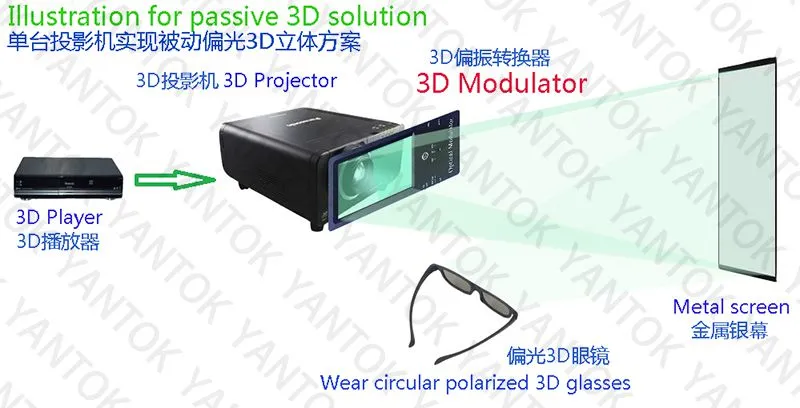
Conventional passive polarized 3D systems rely on two synchronized projectors to render independent images for left and right eyes, generating stereoscopic visuals. This architecture brings two core drawbacks for end-users: doubled hardware investment and cumbersome professional configuration.
Statistical data from global immersive display research indicates that nearly 70% of dual-projector 3D fusion projects encounter hardware adaptation failures, while 68% suffer from unsynchronized signal deviation. Furthermore, 23% of exhibition projects require rework due to debugging errors, resulting in an average additional cost of $2,000–$2,800 per project. The high entry threshold has made premium passive 3D displays unaffordable for most small and medium-sized commercial operators.
1.2 Core Technical Strengths of YT-PS600 Series
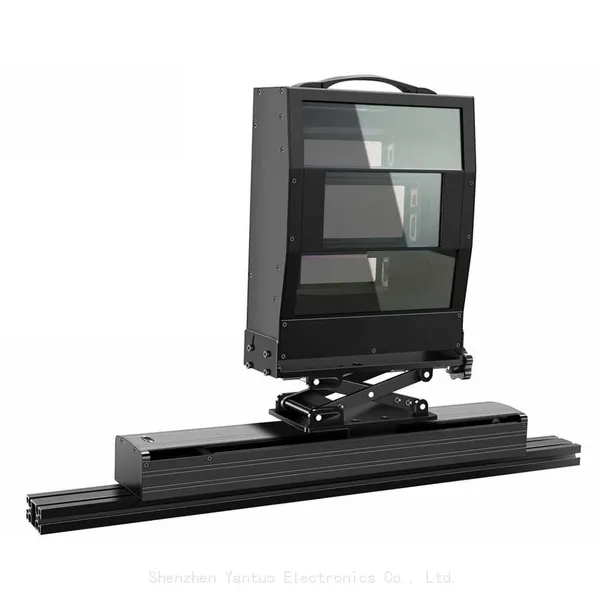
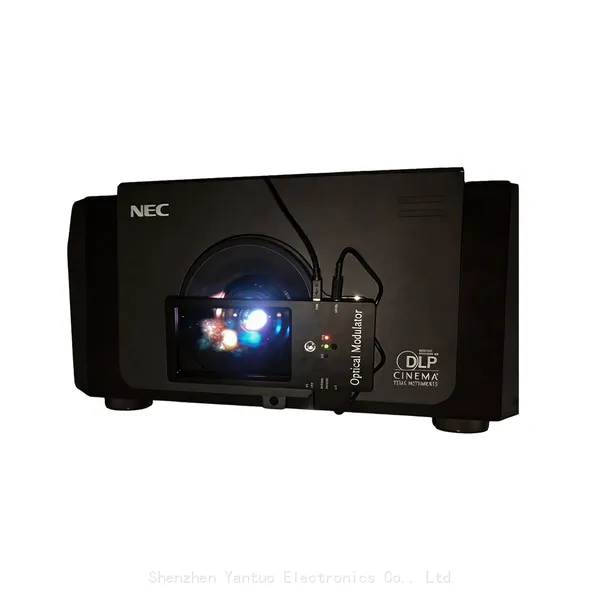
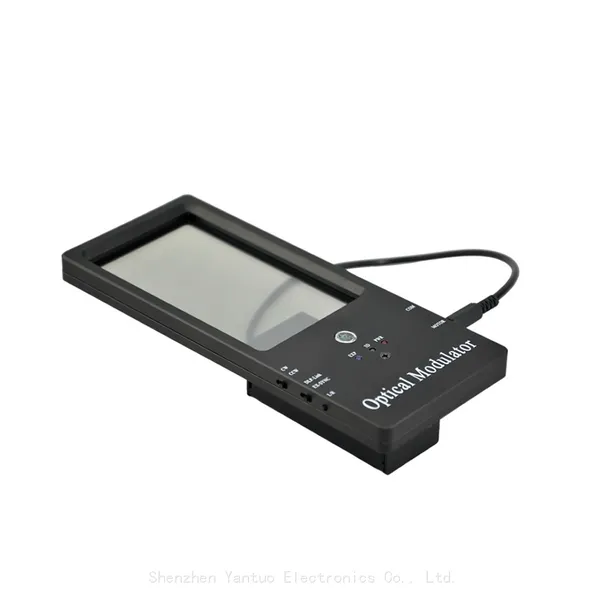
The YT-PS600 series pioneers a single-projector passive polarized 3D solution equipped with self-developed high-speed polarization optical valves. The core mechanism involves rapidly switching polarized light signals for left-eye and right-eye frames within a single optical path. Compatible with mainstream DLP projectors, the system can convert ordinary 2D projection devices into professional passive 3D display equipment without extra hardware overhauls.
The product line consists of two tailored models: the YT-PS600C optimized for commercial cinemas, and the YT-PS600H designed for multi-scenario applications including exhibitions and education. Both models outperform industrial benchmarks across key performance metrics:
Optical Transmittance: 41%±1%, exceeding the industry average of 35%±3%
Light Efficiency: 17%±1%, surpassing the mainstream standard of 15%±2%
Ghosting Rate: Controlled below 1%, far better than the 3% industry threshold, effectively eliminating blurring and double-image issues
Signal Synchronization: Built-in high-precision spatial sensors enable automatic 2D/3D image calibration, keeping synchronization deviation within 5ms
1.3 Improved Deployment Efficiency
The single-unit structure revolutionizes project deployment efficiency. Field tests show that the YT-PS600 can be fully installed and initialized within 3 minutes, compared with 3–5 hours required for traditional dual-projector systems. This innovation cuts overall debugging cycles by over 20% and reduces manual labor costs by 28%, solving the two biggest pain points of passive 3D projection: high expenditure and complicated operation.
2. Cross-industry Applications: Cost Reduction and Experience Upgrading
Benefiting from its simple deployment, wide device compatibility, and cost advantages, the YT-PS600 series has achieved large-scale implementation across multiple vertical industries, helping operators maximize revenue while minimizing upfront and operational expenses.
2.1 Small & Medium-sized Cinemas
For regional chain cinemas and rural public screening venues, upgrading to 3D auditoriums was once financially prohibitive. Dual-projector solutions demand massive capital input, while active-shutter 3D technology requires expensive glasses ($200+ per piece) and frequent battery maintenance.
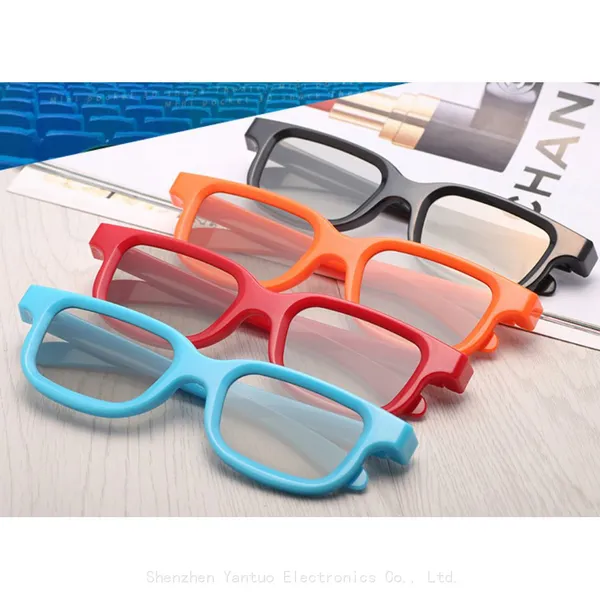
The YT-PS600C changes the market landscape for budget-friendly 3D cinema upgrades. Supporting direct installation on existing projectors, it helps cinema owners build standard passive 3D halls with 40% lower hardware costs. Paired with low-cost polarized glasses (only $2–$5 per unit with zero maintenance), the solution creates additional profit channels for operators. Real-world cases from regional cinema chains demonstrate that this solution boosts audience satisfaction by 35% and increases 3D movie attendance by 22%.
2.2 Cultural Tourism & Exhibition Industry
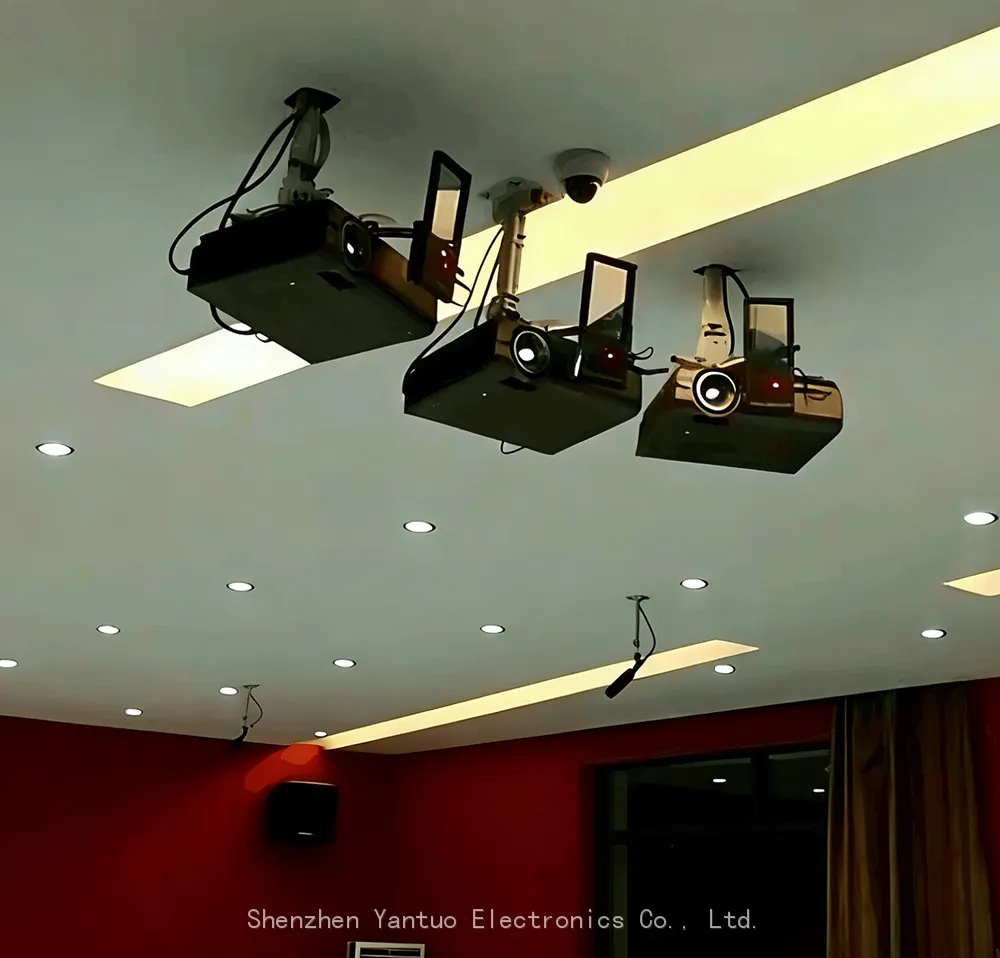
Small and medium-sized exhibition halls, mobile display booths, and temporary tourism exhibition areas require flexible and quickly deployable immersive display solutions. The portable YT-PS600H perfectly matches such dynamic application scenarios.
In a municipal-level science popularization exhibition project, one set of YT-PS600H combined with a single projector delivered a 120-inch high-definition 3D immersive display. The debugging period was shortened from the planned 5 days to 2 days, and daily operation costs were reduced by 30%. The upgraded stereoscopic exhibition increased visitors’ average staying time from 8 minutes to 15 minutes, and user experience ratings rose by 40%. For temporary trade show booths, the entire 3D display system can be assembled within half a day, offering unmatched flexibility for short-term commercial activities.
2.3 Vocational & Higher Education
3D visualized teaching has become an essential tool for mechanical engineering, medical training, and industrial simulation courses. Traditional 3D teaching solutions are too costly for most vocational colleges and educational institutions to popularize.
The YT-PS600H provides an affordable alternative for immersive education. Teachers can seamlessly switch between conventional 2D lectures and interactive 3D demonstrations via the one-click 2D/3D switching function. A practical case from a technical college shows that the stereoscopic teaching system improves the comprehension rate of complex mechanical structures by 38% and raises overall teaching efficiency by 50%. Its low-latency and high-frame-rate performance also supports high-precision scenarios such as surgical simulation and industrial equipment disassembly training.
2.4 Large-scale Multi-screen Immersive Projects
For curved panoramic exhibition halls and oversized immersive spaces that need multi-channel image fusion, traditional solutions require dual projectors for every single screen channel, leading to sky-high costs and extreme debugging complexity.
The multi-device collaborative mode of YT-PS600 rewrites the rules for large-scale 3D fusion projects. Each display channel only needs one projector plus one YT-PS600 device to realize seamless passive polarized 3D splicing. In a 180° curved science museum project covering 12 meters in width, the solution cut total hardware investment by 45% and compressed the debugging cycle from 10 days to 4 days. The synchronized deviation of all display channels is controlled within 5ms, delivering smooth, tear-free panoramic 3D visuals with a user satisfaction score of 9.2/10.
2.5 Medical Visualization
3D medical imaging plays a vital role in preoperative planning and resident doctor training. Nevertheless, professional medical 3D display devices are overly expensive for grassroots medical institutions worldwide.
The YT-PS600 enables hospitals to build low-cost 3D medical imaging systems with ordinary DLP projectors, converting CT and MRI data into intuitive stereoscopic models. In a hepatobiliary surgery project of a tertiary hospital, the system helped surgeons accurately analyze the spatial relationship between tumors and blood vessels, improving preoperative planning efficiency by 40%. Meanwhile, the flicker-free stereoscopic images provide an ideal platform for immersive surgical training, lifting young doctors’ practical training efficiency by 35% and promoting the popularization of high-end visualized medical resources.
3. Market Trend: Single-unit Polarized 3D Usher in Popularization Era
According to the latest 2026 industry report released by the China Video Industry Association, the global 3D projection fusion market reached $2.6 billion in 2025 and is projected to exceed $3.2 billion in 2026, maintaining a year-over-year growth rate above 20%. Currently, passive polarized 3D solutions account for over 60% of the overall market, solidifying its dominant position in the immersive display sector.
Industry analysts point out that single-unit, lightweight, and low-cost will be the core developmental trends of passive 3D technology in the next five years. In the past, passive polarized 3D was exclusively accessible to high-end cinemas and large-scale exhibition venues. With the maturity of single-unit technologies like YT-PS600, immersive displays are rapidly penetrating small-to-medium venues and emerging segmented markets. It is predicted that single-projector passive 3D solutions will occupy more than 80% of the entire 3D projection market by 2030.
Admittedly, single-unit 3D devices have limitations in ultra-large outdoor screens and super-wide panoramic scenarios, which still require multi-device collaboration. However, for over 90% of commercial scenarios including small cinemas, regular exhibition halls, and educational classrooms, the YT-PS600 series delivers the most cost-effective and user-friendly immersive display solution.
Final Conclusion
The YT-PS600 series represents more than a standalone display product; it is a transformative breakthrough driving the democratization of passive polarized 3D technology. By abandoning the outdated dual-projector architecture and solving the core pain points of high cost and difficult deployment, YANTOK Electronics lowers the entry barrier of premium immersive displays to an affordable level for small businesses and grassroots institutions across diverse industries.
As global market demand for immersive visualization continues to surge, accessible single-unit polarized 3D technology will become a foundational infrastructure across cinema, tourism, education, and healthcare. The era of exclusive high-end 3D displays has ended, and the popularization of immersive experiences for all has officially arrived.

Contact Us
Recommended Products
-
 YANTOK YT-PG300 RealD 3D Glasses for CinemaUS$ 0.13 - 0.28MOQ: 1000 Units
 -
YANTOK YT-PS500 3D Passive Polarization Modulator for Cinema ProjectorUS$ 3600 - 5880MOQ: 1 Set
-
YANTOK YT-PS600C 3D Passive Polarization Modulator for Cinema ProjectorUS$ 480 - 650MOQ: 1 Set
-
YANTOK YT-PS600H 3D Passive Polarization Modulator for DLP or D-ILA 3D ProjectorUS$ 380 - 550MOQ: 1 Set
-
YANTOK YT-SG802D Active Shutter DLP 3D Glasses for DLP Link ProjectorUS$ 5.8 - 8MOQ: 10 Units